We have found ways to edit genetic material, cloned sheep, and mapped the entirety of the human genome. But there is one single anomaly completely unphased by the billions of dollars invested in decades of research and still upholds its position as one of the leading causes of death around the globe. What is it about this fascinating phenomenon that makes it so hard to eradicate cancer?
Dead Actors in Film
What do the Last Jedi, Fast and Furious 7 and a Galaxy chocolate commercial all have in common? They all star dead actors. In the Last Jedi, CGI was used to alter footage of Carrie Fisher, to give Princess Leia a second life on screen. In Fast and Furious 7 Paul Walker, recently deceased, was deep faked into scenes to allow the character one final send off. And in 2014, a Galaxy Chocolate commercial had a twenty second shot of Audrey Hepburn to promote their produce, even though the actress has been dead for twenty years. Although in these scenes the ‘ghost actors’ have minimal roles, they are paving the way for something more; as ‘deep-fake’ technology increases, could it be possible for dead actors not just to appear, but also to star in films?
Are The Classics Redundant?
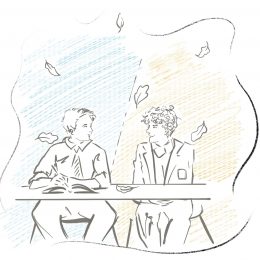
Most scholars would describe the first stanza of Sappho 31 as a confession of love, from a woman to another, describing the anxieties of attraction. More and more I hear people discussing whether the Classics, be it Greek or Latin, should still be included in the curriculum. And yet the question of whether the Classics are redundant baffles me, when this singular poem could so easily be studied in English, History, or the Classics, and it discusses topics that are still crucial in our ever-changing world today – what is love, what it is to love and what it means to be queer.
Top Stories: 24th June
6.1 magnitude earthquake hits Afghanistan on Wednesday. Deadly flooding in Bangladesh and India. Rail strikes still to go ahead this week, as talks remain unsuccessful.
My take on the Slow Journalism movement
Yesterday, during a “research” session into the wonders of modern indie magazines and stylised reporting in general, I came across Delayed Gratification – a quarterly publication specialising in ‘Slow Journalism’, which aims to dissect the top news of the past three months with the privilege of hindsight and context. And honestly? This concept revealed a whole other realm of thought-provoking dilemmas of the modern digital age.