Are Natural Resources a Free Ticket to a Country’s Success

Haiti and the Dominican Republic both share the same land, located in the Caribbean, yet a striking difference in prosperity can be explored between the two. As a starting point, let’s take 1960 – where both countries had virtually the same real GDP per capita (Sancak and Jaramillo, 2007), stripping out the distorting effects of inflation. However, by 2005, the real GDP per capita for the Dominican Republic had tripled whilst Haiti’s GDP had halved. Alongside differences in each country’s wealth, there is a vast contrast in the unemployment rates. Haiti’s unemployment rate stands over double that of the Dominican Republic (O’Neill, 2023) sitting at 14.84% as of 2022 compared to 7.12% for the Dominican Republic. Now, we cannot be sure as to whether the unemployment is the cause, effect, or even a pure correlation to their wealth, however this leads us to question, what has occurred in the past 60 years that has resulted in such clear differences in the countries success and growth?

Are Natural Resources a Free Ticket to a Country’s Success

Celebrating Our Sisters: Dr. Mae C Jemison

Since the theme for Black History Month this year is Celebrating Our sisters, I decided to write about Dr. Mae C. Jemison, a true pioneer and an inspiration to millions. During her lifetime, she has left an unforgettable mark on both our scientific and cultural understanding of the world and outer universe. As the first African American woman to travel to space, her life’s journey serves as a testament to the power of determination, intellect, and hard work.

Celebrating Our Sisters: Dr. Mae C Jemison

Representation and the Girl in the Mirror

As a child, whenever I watched TV, I never saw somebody who looked like me. It was hard to dress up as my favourite character from a movie. Tiana was great but I loved Belle’s dress the most. It was only when I started watching Disney Channel that I got to see Zendaya in Shake It Up and I could think that maybe I looked a bit like her. So many kids grow up not being able to see themselves in their favourite characters from the shows they watch every day. I couldn’t picture what it would be like to look at those characters and see what I saw in the mirror, especially growing up as a mixed child, I never got to see characters that looked even remotely like me.

Representation and the Girl in the Mirror

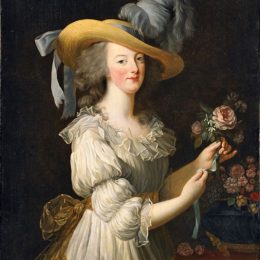
The Creole Origins of the Chemise de la Reine

If you’ve spent enough time around me, you will have heard about the infamous 18th century dress, the so called ‘Chemise de la Reine’. To explain, a ‘chemise’ was a women’s undergarment, worn directly against the skin under a set of stays or as a nightgown, and usually made of fine white material. In 1783, Marie Antoinette (the ‘reine’ at that time) was painted wearing a dress which loosely resembled a ‘chemise’, displayed at the Salon de Paris in the Louvre. The gown sparked outrage due to its perceived informality and nonconformity with the highly structured aesthetic of traditional court gowns. It was unlike anything worn by French aristocracy before. But although named after the queen, the ‘Chemise de la Reine’ was not invented by Marie Antoinette. So, where did it come from?

The Creole Origins of the Chemise de la Reine

Why is Black History Only Celebrated in One Month?

October marks the start of Black History Month. It is a celebration of the contributions that Black people have made to world history and raises awareness of their incredible achievements. However, the national school curriculum does little to highlight Black history beyond slavery, which is disempowering not only to Black communities, but also white children who are not educated about the broader picture of ethnic minority backgrounds. Therefore, it feels vital to acknowledge and support this important celebration. This is done through having a whole month dedicated to learning about Black History.

Why is Black History Only Celebrated in One Month?