Comparing Dido and Cleopatra

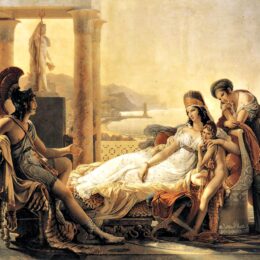
Virgil’s epic, ‘The Aeneid’, tells the story of Aeneas; the dutiful Trojan hero who (after several sorrowful episodes) founds the city of Rome. It makes sense, therefore, that Virgil, writing under the first Roman emperor Augustus, creates links between the characters of his foundation myth and the powerful figures of ancient Rome which his readers inhabit.

Comparing Dido and Cleopatra

Are Natural Resources a Free Ticket to a Country’s Success

Haiti and the Dominican Republic both share the same land, located in the Caribbean, yet a striking difference in prosperity can be explored between the two. As a starting point, let’s take 1960 – where both countries had virtually the same real GDP per capita (Sancak and Jaramillo, 2007), stripping out the distorting effects of inflation. However, by 2005, the real GDP per capita for the Dominican Republic had tripled whilst Haiti’s GDP had halved. Alongside differences in each country’s wealth, there is a vast contrast in the unemployment rates. Haiti’s unemployment rate stands over double that of the Dominican Republic (O’Neill, 2023) sitting at 14.84% as of 2022 compared to 7.12% for the Dominican Republic. Now, we cannot be sure as to whether the unemployment is the cause, effect, or even a pure correlation to their wealth, however this leads us to question, what has occurred in the past 60 years that has resulted in such clear differences in the countries success and growth?


Are Natural Resources a Free Ticket to a Country’s Success

The Creole Origins of the Chemise de la Reine

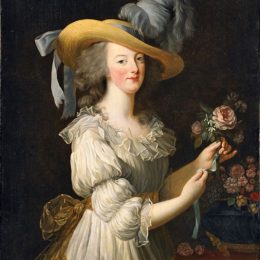
If you’ve spent enough time around me, you will have heard about the infamous 18th century dress, the so called ‘Chemise de la Reine’. To explain, a ‘chemise’ was a women’s undergarment, worn directly against the skin under a set of stays or as a nightgown, and usually made of fine white material. In 1783, Marie Antoinette (the ‘reine’ at that time) was painted wearing a dress which loosely resembled a ‘chemise’, displayed at the Salon de Paris in the Louvre. The gown sparked outrage due to its perceived informality and nonconformity with the highly structured aesthetic of traditional court gowns. It was unlike anything worn by French aristocracy before. But although named after the queen, the ‘Chemise de la Reine’ was not invented by Marie Antoinette. So, where did it come from?

The Creole Origins of the Chemise de la Reine

The Bends

Humans have always explored – this is a fact that has remain unchanged throughout history. And as our technology has adapted, this has allowed us to explore places that have never been seen by people, including the depths of the ocean.

The Bends